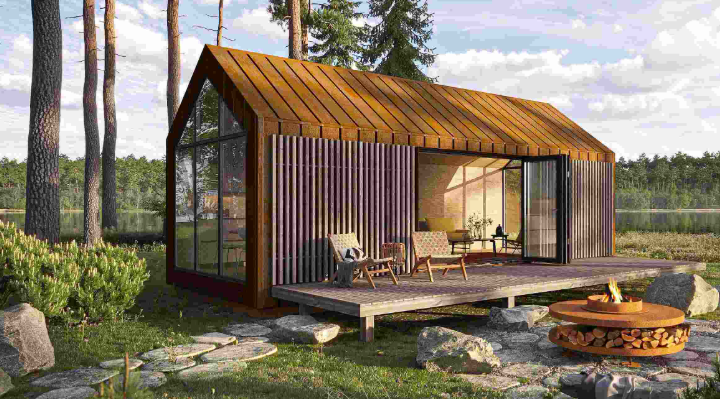
You can get a high-quality, energy-efficient home faster and often for less money than with traditional stick‑built construction.
Explore what prefab truly means, how modular and panelized options differ, and which tradeoffs—like customization limits or site prep—matter most for your budget and timeline.
By the end of this article you’ll know whether a prefab route fits your goals, costs, and schedule, and what to ask builders to avoid surprises.
What Are Prefab Homes?
Prefab homes are houses built from factory-made components that you assemble on-site, designed to speed construction, reduce waste, and improve quality control. They come in distinct types, follow a predictable factory-to-site process, and rely on a limited set of proven materials.


Types of Prefab Homes
Prefab options fall into three main categories: modular, panelized, and manufactured (including container and kit homes). Modular homes are built as complete volumetric units in a factory, transported on trucks, and craned into place. You get quicker weather-independent construction and near-custom interior layouts with modular builds.
Panelized homes arrive as flat wall, floor, and roof panels that your contractor assembles on-site. They let you use conventional framing techniques while still reducing on-site labor and waste. Panelized systems work well when you want site-specific fits or local finishing.
Manufactured and kit homes include converted shipping containers, SIP-based kits, and HUD-code mobile homes. These often cost less and can be highly transportable, but zoning and financing rules vary. Choose the type based on site access, local codes, budget, and how much customization you want.
Prefab Construction Process
You start with a design and site plan, then obtain permits and confirm foundation requirements specific to your local code. The factory builds components to precise tolerances while the site foundation and utilities get prepared in parallel.
Quality control occurs at the factory through inspections and standardized assembly procedures, which reduces rework and weather delays. Transport follows, where modules or panels move by truck; your contractor coordinates lifting, anchoring, and sealing to form a weather-tight shell.
On-site finish work includes mechanical hookups, interior trim, and any masonry or exterior finishes. Typical timelines shrink compared with stick-built houses because factory and site work happen at once, often cutting total calendar time by weeks to months.
See also: Why Homepage Navigation Matters for First-Time Buyers
Core Materials Used
Structural systems commonly use light-gauge steel, engineered wood (LVL, glulam), or traditional dimensional lumber depending on the prefab type. Modular units often employ steel frames or heavy timber to resist transport stresses, while panelized systems use platform framing or structural insulated panels (SIPs).
Insulation choices include fiberglass batts, spray foam, mineral wool, and rigid foam; SIPs combine structure and insulation in one panel. Exterior cladding options mirror site-built homes: fibre cement, vinyl, wood siding, metal panels, and masonry veneers are all compatible with prefab assemblies.
Fasteners, sealants, and vapor-control layers receive attention because joints experience transport movement. You should confirm material specifications, fire ratings, and warranty coverage before purchase to ensure long-term performance.
Benefits and Considerations of Prefab Homes
Prefab homes shorten build time, reduce waste, and often lower labor costs while offering predictable quality and a range of customization choices. You should weigh site preparation, delivery logistics, and local permitting before deciding.
Advantages Over Traditional Builds
Prefab homes are built in factory-controlled settings, which tightens construction schedules and reduces weather delays. You can often move in weeks to months after site work finishes rather than waiting many months for an on-site build.
Quality control improves because the same crew builds many components under consistent supervision and with calibrated tools. That typically leads to more precise framing, better sealed envelopes, and fewer on-site errors you’d otherwise spend time troubleshooting.
Site disruption is smaller: less on-site labor, reduced noise, and shorter periods of heavy equipment use. You still need a prepared foundation, crane time for set‑up, and coordination for utility hookups.
Energy Efficiency and Sustainability
Factories let builders optimize insulation, air barriers, and window installation to obtain tighter building envelopes. You should expect lower air leakage rates and more consistent insulation installation than many field-built homes.
Many prefab manufacturers offer high-performance packages—triple‑glazed windows, continuous exterior insulation, and mechanical ventilation with heat recovery. Those features help you cut heating and cooling loads and reduce monthly energy bills.
Prefab construction also limits material waste because off‑cuts can be reused across production lines. If you prioritize low embodied carbon, look for suppliers using recycled steel, FSC-certified wood, or documented waste‑reduction practices.
Cost Factors and Pricing
Prefab homes often lower labor costs through factory efficiency, which can reduce overall construction price per square foot. You should still budget separately for land purchase, foundation, site utilities, and crane/transport fees.
Fixed-price packages are common; that predictability helps you avoid many change-order surprises. However, remote delivery distances and difficult access can add significant transport and crane costs, sometimes offsetting factory savings.
Financing and insurance can differ from conventional homes. Confirm lender familiarity with prefab products, and get written allowances for site prep, permits, and utility connections to prevent scope gaps that increase your final cost.
Customization Options
Prefab doesn’t mean one-size-fits-all. You can choose from standardized floorplans with modular adjustments or fully bespoke panelized and modular systems. Many manufacturers let you change room layouts, finishes, and exterior cladding within set parameters.
Options vary by manufacturer: some offer a menu of kitchen and bath packages, others allow structural grid changes for larger windows or extra rooms. You should request detailed drawings and a clear change-order policy so you know which modifications affect price and schedule.
Consider long‑term flexibility: pick systems that allow future additions or exterior changes without tearing down factory‑built elements. That preserves resale value and gives you room to adapt the home as your needs evolve.